How can existing water be treated and converted into drinking water cost-effectively in remote areas affected by water scarcity?
5. Semester Ba
Project Duration 14 Weeks
Muthesius Kunsthochschule
Team Partner: Karla Biehrer, Vico Seemann

Chanllenge
Worldwide, around 2.2 billion people lack reliable and safe access to clean drinking water, which is approximately one in four people on Earth. Of these, around 70% have access to water that is not safe to drink.
These numbers will probably rise as climate change intensifies, while at the same time water sources are being bought up by large corporations and water is increasingly being commercialized.
How can this trend be countered, and how can water be treated cheaply and without depending on electricity?
excursion to Almería
For our research, we took part in an excursion to Almería in the south of Spain, in Europe's only desert. It is where most of Europe's vegetables come from, which is why the region is also called "the greenhouse of Europe." As a result, water consumption is extremely high. At the same time, the workers live in precarious conditions, often without a safe water supply. In the surrounding villages, the tap water is often salinized by old pipes, and during particularly severe dry periods it fails completely.


Worldwide, around 2.2 billion people lack reliable and safe access to clean drinking water. That is approximately one in four people on Earth. Of these, around 70% have access to water that is not safe to drink.


How it works
Dirty saltwater is poured into the top of the device, where it collects in a black central bowl. Linen cloths draw up the water through capillary action. As heat builds inside the object, the water evaporates and then condenses on the outer foil. The condensed water runs down into a bowl at the bottom.
Before entering the bottle, it passes through a small capsule that can be filled with different materials to remineralize the water, making it safe to drink.


Construction
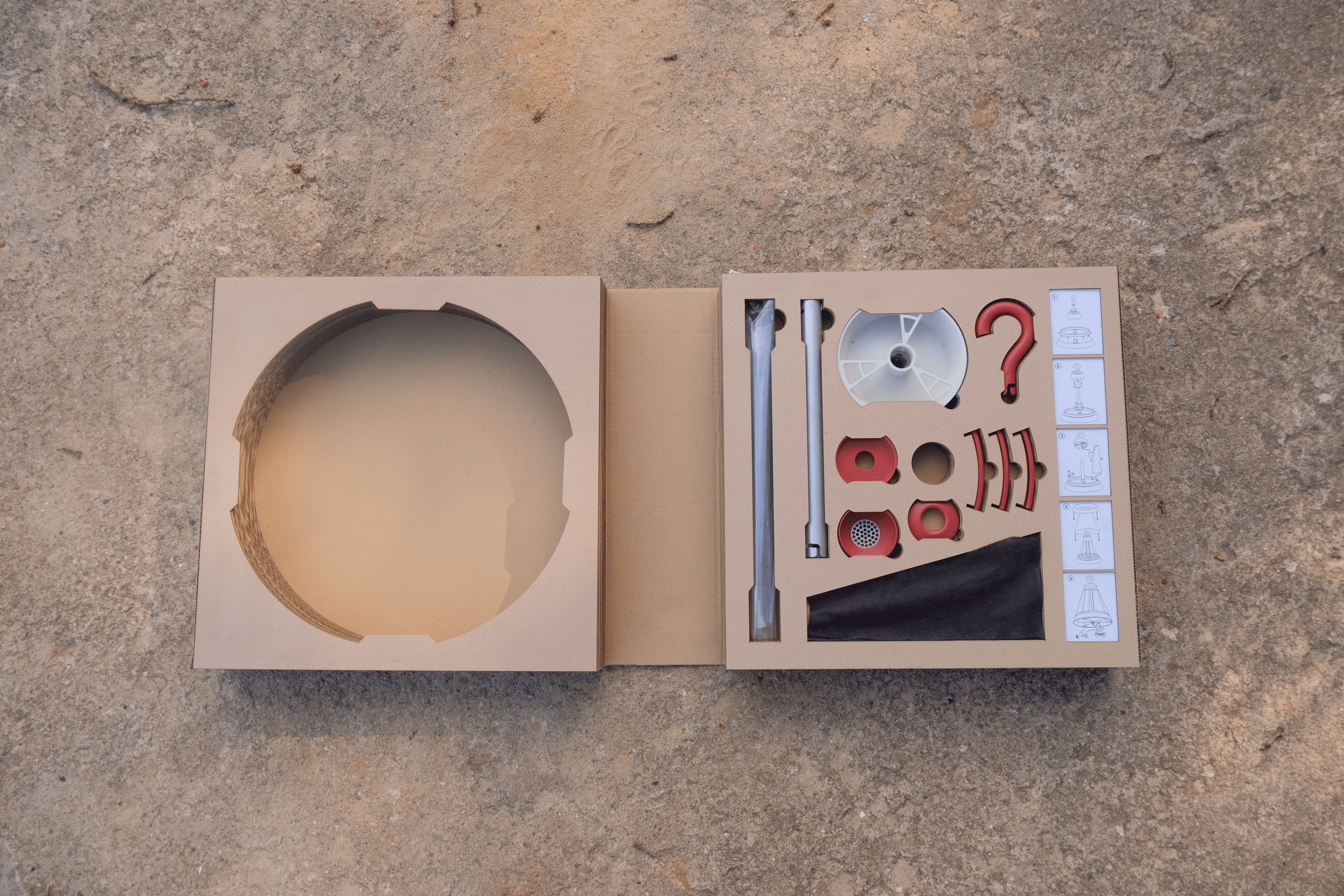
The system is designed to use as few components as possible, which keeps it easy and affordable to produce and assemble.
Its main parts connect through a bayonet mechanism, so they can be attached and detached with a simple twist. This also makes cleaning, maintenance, and refilling quick and straightforward.
The linen cloths, which naturally wear out over time, can easily be replaced with any natural fabric. Users therefore do not depend on special replacement parts and can use materials that are available in their own surroundings, which keeps the system practical and long-lasting.
Remineralization
Distilled water lacks minerals, and without them osmosis could damage our cells. To make distilled water drinkable, it therefore has to be remineralized.
For this, a small container is screwed in between the bottle and the lower tray. Certain stones, fruits, or tea can be placed inside it to add minerals to the water.


assembly


other projects
other projects


Arved Kappelhoff